

Gastroenterology
Endoscopy reporting, digestive disease tracking, and structured procedure documentation for gastroenterology practices
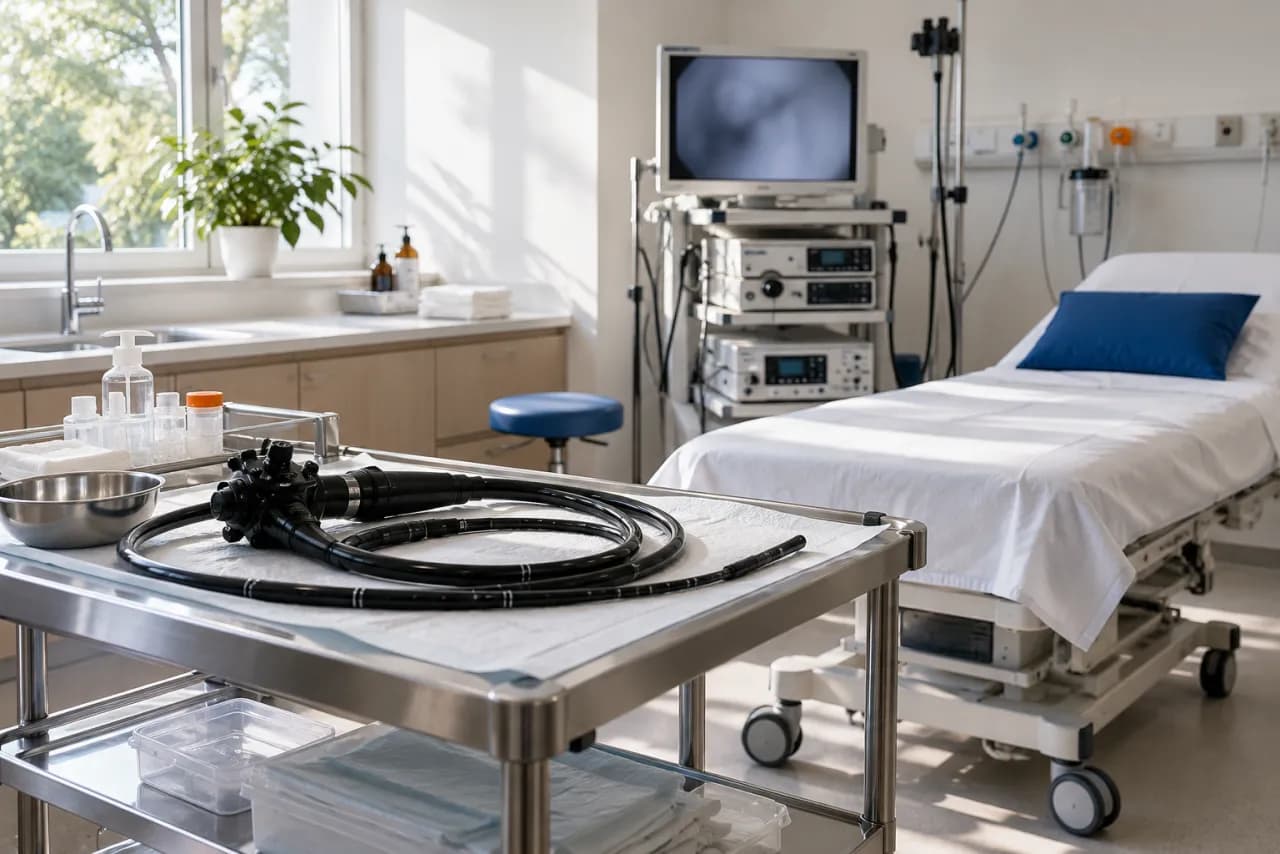
11:15 — a colonoscopy report is finalized.
Minutes after a screening colonoscopy, findings and biopsy sites are captured into a structured Encounter record. TUCAN cross-references prior findings to set the surveillance interval, extracts the referral letter's key data into the chart, and a structured procedure note with the matching billing code is ready before the patient is fully awake — with pathology already linked to its site of origin.
What your practice gains
Surveillance kept in view
Endoscopy findings are trended against prior procedures, so recall intervals surface on time.
Change caught early
Disease-activity signals are read across encounters and flagged when they move.
Notes that keep pace
Procedure documentation is drafted from the encounter instead of typed after the suite.
Coding without the afterthought
The matching GOÄ/EBM code is proposed with each procedure note, so nothing billable slips away.
Recall that carries itself
Surveillance intervals and reviews are scheduled with prior findings carried forward automatically.
Clinical Use Cases
IBD Management
Track Crohn's and ulcerative colitis activity over time with structured assessments, medication titration, and flare monitoring.
Colorectal Cancer Screening
Surveillance scheduling driven by prior findings, with automated recall intervals and structured screening documentation.
Chronic Liver Disease
Longitudinal lab trending, imaging linkage, and structured staging for hepatology follow-up.
What changes for your practice
Structured endoscopy
Procedures, findings, and biopsy sites are captured to a structured record and drive surveillance automatically.
- Structured colonoscopy, gastroscopy, and ERCP reporting to the FHIR record
- Pathology linked to its endoscopic site of origin
- Surveillance intervals driven by prior findings
Documentation that writes itself
Procedure notes, referral intake, and coding are drafted from the encounter instead of typed after it.
- Structured procedure notes generated in context to the Encounter
- Document AI extracts structured data from inbound referral letters
- One-click correction rather than blank-page dictation
Disease-activity continuity
Longitudinal scoring, recalls, and remote checks keep chronic GI patients on track without manual chasing.
- IBD and chronic-disease activity scored and trended across encounters
- Automated recall scheduling for colorectal cancer surveillance
- Remote follow-up consults with the full procedure history in view
The connected pipeline
Structured procedure capture
Findings, biopsy sites, and follow-up intervals are captured directly into a structured Encounter record.
Surveillance synthesis
TUCAN cross-references prior findings and referral data to set surveillance intervals and flag disease-activity change.
Clinician review
The gastroenterologist confirms findings, links pathology to its site of origin, and records the plan in the chart.
Structured note + coding
A structured procedure note is generated and the matching GOÄ/EBM billing code is attached automatically.
Recall + follow-up
Surveillance recalls and remote follow-ups are scheduled with the procedure and pathology history carried forward.
How the data moves
Procedure and history capture
Endoscopy findings and history are captured through structured procedure forms.
TUCAN surveillance synthesis
Findings and pathology are read into a picture with change and recall signals.
FHIR record
Procedures, findings, and outcomes are written to the patient's structured clinical record.
Structured note + coding
A procedure note is drafted from the reviewed encounter for the gastroenterologist to confirm.
Recall schedule
Surveillance procedures and reviews are scheduled with prior findings carried forward.
Where the AI works
Each agent owns a distinct part of the gastroenterology workflow, so the clinician stays in control of every decision.
Reads endoscopy findings and pathology into a surveillance picture and flags changes since the last procedure before the clinician opens the chart.
Drafts the structured procedure note and surveillance summary from the reviewed encounter for one-click correction.
Guides procedure intake and recall steps, keeping surveillance intervals and reviews on track.
How Dudoxx delivers it
Surveillance and activity trending
Procedure notes and referral intake
Endoscopy and bowel-prep forms
Remote GI follow-up
GOÄ/EBM coding
Integrations
DICOM Imaging
Native DICOM support for endoscopic imaging and abdominal studies with PACS connectivity and standardized storage.
Lab & Pathology
Direct lab order placement for biopsies and stool studies with automated result retrieval and report linking.
Telemedicine
Secure video consultations for pre-procedure assessment and remote follow-up appointments.