


Comprehensive respiratory care from pulmonary function testing to chronic disease management

Pulmonology

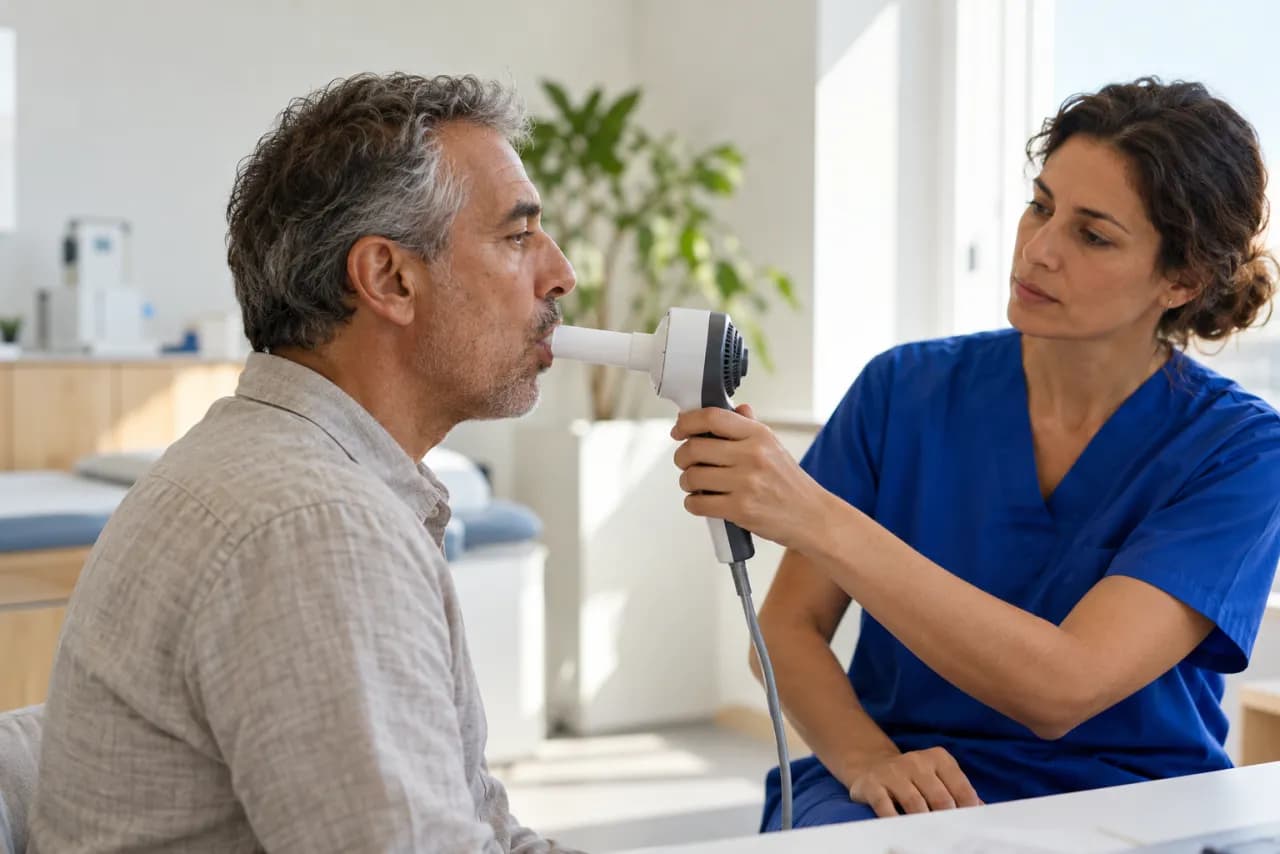
Spirometry tracking, respiratory disease management, and pulmonary function workflows for pulmonology practices

10:05 — a COPD follow-up lands.

A patient with COPD arrives after a winter of breathlessness, home SpO2 readings synced from a monitor. TUCAN trends the falling FEV1, ties the two recent exacerbations to the readings, and drafts a structured visit note with an updated action plan — the pulmonologist confirms the inhaler step-up, documents the technique check, and the coded encounter is closed before the next appointment.

What your practice gains

Lung function changes seen sooner

Spirometry is trended against baseline, so decline surfaces before the next visit.

Control kept in view

Respiratory signals are read across encounters and flagged when they drift.

Notes that keep pace

Visit documentation is drafted from the encounter instead of typed after the clinic.

Coding without the afterthought

The matching GOÄ/EBM code is proposed with each note, so nothing billable slips away.

Follow-up that carries itself

Monitoring intervals and reviews are scheduled with prior results carried forward automatically.

Clinical Use Cases

COPD Management

Track spirometry decline, manage exacerbations, and document action plans through a structured COPD care pathway.

Asthma Control

Combine symptom scoring, peak-flow trending, and step-up/step-down medication management for asthma control.

Sleep & Respiratory Screening

Structured screening workflows with questionnaire scoring and automated referral triggers for sleep studies.

What changes for your practice

Respiratory intelligence

Spirometry, SpO2, and symptom scores are read as one longitudinal signal with decline alerts, not isolated tests.

  • FEV1, FVC, and peak-flow trended with reference-range and decline alerts
  • Home SpO2 and respiratory vitals ingested and flagged for anomalies
  • Asthma and COPD severity scored with exacerbation tracking

Documentation that writes itself

Structured visit notes and action plans are drafted from the respiratory review instead of typed after it.

  • Structured Encounter note generated from the reviewed tests
  • Asthma and COPD action plans with guideline-adherence monitoring
  • One-click correction rather than blank-page dictation

Adherence & technique

Inhaler and respiratory protocols carry technique documentation, interaction checks, and adherence tracking.

  • Inhaler technique documented at each review
  • Interaction checks before the prescription is signed
  • Adherence patterns surfaced against exacerbation history

The connected pipeline

  1. Data intake

    Spirometry results, home SpO2 readings, and symptom scores are pulled into a single trended view before the visit.

  2. Trend analysis

    TUCAN charts the pulmonary-function decline, ties exacerbations to the readings, and proposes a documented action plan.

  3. Clinician review

    The pulmonologist confirms or adjusts the plan and inhaler regimen and records it directly in the chart.

  4. Structured note + coding

    A structured visit note is generated and the matching GOÄ/EBM billing code is attached automatically.

  5. Monitoring & follow-up

    Spirometry recalls, remote reviews, and exacerbation check-ins are scheduled with the trend history carried forward.

How the data moves

Data and test intake

Respiratory history and spirometry are captured through structured, device-linked forms.

TUCAN trend analysis

Spirometry and function tests are read into a trend with reference-range signals.

FHIR record

Test results and outcomes are written to the patient's structured clinical record.

Structured note + coding

A visit note is drafted from the reviewed encounter for the pulmonologist to confirm.

Monitoring schedule

Follow-up tests and reviews are scheduled with prior results carried forward.

Where the AI works

Each agent owns a distinct part of the pulmonology workflow, so the clinician stays in control of every decision.

TUCAN

Reads spirometry and function tests into a trend and flags declining function before the clinician opens the chart.

Condor

Drafts the structured visit note and management summary from the reviewed encounter for one-click correction.

FlowAgent

Guides intake and follow-up steps, keeping monitoring intervals and reviews on track.

TW
Thomas WeberMRN-2026-0847
Penicillin Allergy
Allergies
PenicillinAnaphylaxisSevere
LatexSkin RashModerate
IbuprofenNauseaMild
Medications
Metformin 1000mgTwice daily
Lisinopril 10mgOnce daily
Aspirin 100mgOnce daily
Recent Labs
HbA1c6.8%High
LDL Cholesterol98 mg/dLNormal
eGFR> 90Normal

How Dudoxx delivers it

Pulmonary-function trending

Structured visit notes

Symptom & peak-flow diaries

Remote respiratory reviews

GOÄ/EBM coding

Integrations

Spirometry Devices

Direct integration with spirometers for automated import and structured pulmonary function data extraction.

Pulmonary Imaging

DICOM connectivity for chest imaging with measurement tools and structured report generation.

Home Monitoring

Data ingestion from connected pulse oximeters and home respiratory monitors for continuous tracking.

Ready to Transform Your Practice?

Get a personalized demo tailored to your specialty and practice size. All solutions are FHIR R4 native and run fully on-premise.