
Dentistry
Dental charting, treatment planning, and oral health documentation for dental practices
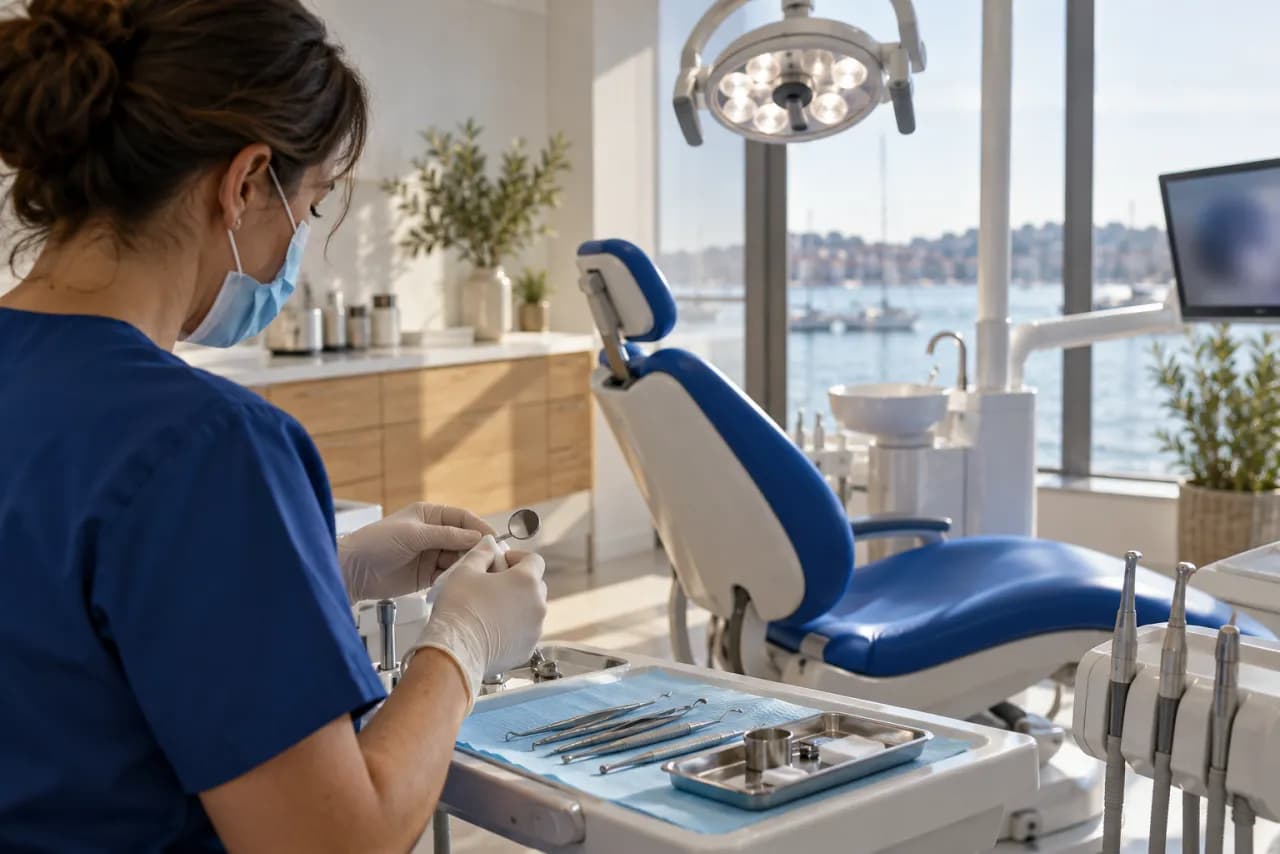
10:00 — a recall exam with a new radiograph.
The bitewings load into the tooth chart and Document AI reads last visit's records into a concise history, flagging an interproximal lesion that has progressed since the prior series. A treatment plan is staged on the chart, a structured visit note is drafted, and the matching GOÄ code is attached — so the restorative sequence is planned, documented, and billable before the patient rinses.
What your practice gains
Charting that stays current
Tooth-level findings are read from the exam so the chart reflects the mouth in front of you.
Treatment plans that hold together
Proposed procedures are sequenced against prior findings so nothing is planned twice.
Notes that keep pace
Visit documentation is drafted from the exam and imaging instead of typed after the chair.
Coding without the afterthought
The matching GOZ/BEMA code is proposed with each procedure note, so nothing billable slips away.
Recalls that carry themselves
Hygiene and review recalls are scheduled with the last chart carried forward automatically.
Clinical Use Cases
Restorative Dentistry
Document caries, restorations, and treatment phases with structured charting and longitudinal tracking.
Periodontal Care
Track periodontal measurements, charting, and maintenance intervals with progression monitoring across visits.
Oral Surgery Planning
Pre-operative planning with CBCT imaging review, structured surgical documentation, and follow-up scheduling.
What changes for your practice
Charting and planning intelligence
Radiographs, tooth charting, and prior records are read together so the plan reflects the whole mouth over time.
- Tooth-by-tooth charting linked to imaging and findings
- Document AI condenses prior dental records into a concise history
- Treatment plans staged on the chart with sequencing and cost estimates
Documentation that writes itself
Structured visit notes and treatment plans are drafted from the encounter instead of typed after it.
- Structured dental visit note generated from recorded findings
- Treatment plan documentation templated for restorative and surgical care
- One-click correction rather than blank-page dictation
Continuity of care
Recalls, hygiene intervals, and remote checks keep restorative and periodontal patients on track without manual chasing.
- Automated recall scheduling for hygiene and periodontal maintenance
- Side-by-side radiograph comparison for lesion and bone-level tracking
- Remote follow-up consults with the full dental history in view
The connected pipeline
History intake
The patient completes a structured dental and medical history form while Document AI condenses prior records into the chart.
Charting and imaging
Findings are recorded on the tooth chart and radiographs are imported and compared against prior series.
Treatment planning
The dentist stages a treatment plan on the chart with sequencing, confirms the diagnosis, and records it.
Structured note + coding
A structured dental visit note is generated and the matching GOÄ/EBM billing code is attached automatically.
Recall scheduling
Hygiene recalls, treatment-plan follow-ups, and remote checks are scheduled with the dental history carried forward.
How the data moves
History and charting intake
Dental history and tooth-level findings are captured through structured charting forms.
TUCAN imaging review
Radiographs and charting are read into a picture of the mouth with change and risk signals.
FHIR record
Charting, imaging, and treatment plans are written to the patient's structured clinical record.
Structured note + coding
A procedure note is drafted from the reviewed exam for the dentist to confirm.
Recall schedule
Hygiene visits and reviews are scheduled with prior charting carried forward.
Where the AI works
Each agent owns a distinct part of the dental workflow, so the clinician stays in control of every decision.
Reads radiographs and charting into a picture of the mouth and flags changes since the last visit before the dentist opens the chart.
Drafts the structured procedure note and treatment plan from the reviewed exam for one-click correction.
Guides charting intake and recall steps, keeping hygiene visits and reviews on track.
How Dudoxx delivers it
Structured visit notes
Dental history intake
Remote follow-up
GOÄ/EBM coding
Integrations
Dental Imaging
DICOM connectivity for intraoral, panoramic, and CBCT imaging with measurement and annotation tools.
Dental Labs
Electronic case submission to dental laboratories with status tracking and patient notification.
Telemedicine
Secure image sharing and video consultations for remote dental assessment and follow-up.